The NottAlone Podcast
Real talk about mental health with Dr Órlaith Green and Dr Maddi Popoola
Series three episode two: Eating disorder recovery and cosy living for mental health with Grace
Episode description
Series three episode two: Eating disorder recovery and cosy living for mental health with Grace
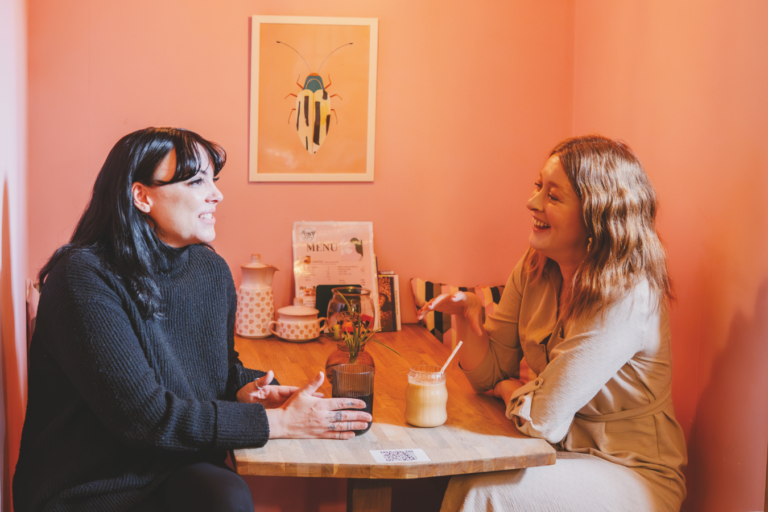
Grace Wood sat down with The NottAlone Podcast hosts Dr Órlaith Green and Dr Maddi Popoola to talk about her road to recovery from an eating disorder and her plan to run the London Marathon to raise money for the charity that helped her.
Maddi and Órlaith chat to Grace about her challenges seeking medical help, the techniques that helped her overcome her eating disorder and what she wants more people to know about recovery.
Grace shares her experience of contacting mental health support services and explains why she wants to urge others to do the same. Grace’s story aims to remind people that eating disorders can affect anyone, and to help break down stereotypes and stigma.
Content note: this episode discusses some heavy topics around eating disorders. Please, listen with care, take a break if you need it and visit NottAlone.org.uk if you need support around any of the issues raised in this episode.
Series three of The NottAlone Podcast is a special four-episode podcast series which explores some challenging topics, hearing young people’s first-hand experiences of grief, loss, eating disorder recovery and overcoming anxiety and panic attacks.
Transcript of episode
Music: Whatever you’re going through…
Maddi: Ey up. And welcome to The NottAlone Podcast, a place where we talk all things mental health. I’m Maddi.
Órlaith: And I’m Órlaith. We’re educational psychologists and we’re here to open up the conversation and offer a helping hand through different and sometimes challenging subjects around mental health.
Maddi: We chat to guests who offer their own perspectives on personal challenges, as well as professionals who share their advice. Sometimes these conversations can be tough, so please take care while listening and take a break if you need to. This episode touches on some heavy subjects around eating disorders, so please, listen at your own pace, pause if you need to and as always, take care of yourself.
Órlaith: Remember, if you’re impacted by any of the topics we cover, you can visit NottAlone.org.uk to find advice and support. So, let’s get started.
Maddi: Welcome back, everybody
Órlaith: Hello hello! Welcome back and thanks for listening. I’m excited about our guest today.
Maddi: I’m excited about our guest today. Welcome, Grace Wood! Hello.
Grace: Hello.
Maddi: Thank you so much for being here. Tell the listeners a little bit about yourself.
Grace: Yeah, so I’m Grace, I’m 21 years old. I study psychology and I absolutely love it. And I, basically, on my platforms I started talking about my mental health, recovery from an eating disorder, my own recovery and getting better and everything like that. And now it’s all about sort of taking care of yourself, the importance of being kind to yourself and celebrating what recovery has brought into my life.
Órlaith: Thank you so much for joining us.
Grace : Oh, thank you for having me on. I’m so excited.
Órlaith: So you talk a lot about you and your story on your social media platforms and I was just really interested to start there and tell us a bit about why you like to post about mental health and wellbeing, why you got into it?
Grace: I started it when I was struggling with my eating disorder, when I started recovery and it was because I struggled to get the help because of my BMI. I was really struggling to get support because I was always rated as healthy. Every time I’d reach out for that help, it’d be like, oh, but your BMI is healthy. And I was like, yeah, but I’m not healthy. And I basically ended up in a place where I ended up critically ill because of my BMI being ignored and ignored and ignored. So, I started this campaign, I started a petition to remove BMI from the treatment and diagnosis of eating disorders and basically started my platforms to boost that petition, not think it’d turn into anything. And I started basically sharing my journey as somebody who didn’t follow the stereotypical story of somebody with an eating disorder, you know, physically, I was told, but you don’t look like you have an eating disorder. I was like, but it’s a mental disorder, not a weight disorder. And it was basically to start telling and showing to people, okay, if you’re not following the stereotype, it doesn’t matter, because I think it’s like less than 6% of people with an eating disorder are underweight. And I was like, okay, I need to get this across.
Maddi: It’s so important what you’re saying, because when you typically think of eating disorders, the words that come to my mind are anorexia nervosa or bulimia, both of which also carry this image of somebody who’s extremely thin. And I think that’s probably, backed up very much by the media. I wanted to ask a bit more about that, if that’s all right.
Grace: Absolutely.
Maddi: If you don’t mind talking about it? Obviously, with BMI, I think it’s something that’s been thrown out time and time again as perhaps not a measure that we should be using. And it’s still continually used, isn’t it, for lots of different things, not just for, for mental health services. But I wanted to understand a little bit more about why, so my understanding, Grace, and correct me if I’m wrong, is that you were kind of rejected from help, from the specific teams that would work with eating disorders, because your BMI was too high.
Grace: Yeah.
Maddi: Is that right?
Grace: Exactly. So first we went for help. It was sort of, okay, well, let’s just do a few health checks, check everything’s all right. And because I was at a point where it was still, you know, like, mentally, it was the main thing. It wasn’t physically really affecting me because obviously physical, they’re like a consequence, aren’t they, of an eating disorder, not a ruler of how severe it is. And I was getting to that point and then it’d go back. So, me and my mum are so close so she knew. I’d moved to Manchester let, which is obviously like an hour and a half or can be like two hours away. And she didn’t know the extent of what was going on because obviously she could only either see me on FaceTime or, like, hear me on a phone call. But she knew. I was always open with my mom. I always said to her, and when it started to get: really bad and I was like, okay, this isn’t just like a bit of a down day. This is, something’s going on. And I was able to open up to her, and straight away my mum was like, okay, we’re going to the doctors, we’re getting help. And my mum was very protective through the whole thing. Like, yeah, when we went to the doctors, like, say, talking to the doctors about getting that support, and when obviously we was turned away because of the BMI, my mum would say, right, we’re booking another appointment. I got to a point, it was a few times in, when we’d gone back and said, okay, I’m struggling. And I got referred to early intervention. But as I went to early intervention, they was like, well, this is too far for us. So we went back to the doctors because they referred us back, rejected that because it was too far, and then went back and there was like, you don’t meet the criteria for the next one. So it was either early intervention, which was too far gone, or the, like, next step up, but wasn’t meeting that. So I was just in this middle ground of, well, what do I do? Then one day we went to the doctors, back again, and we was like, what do we do? Like, I’m getting worse. It’s affecting everything now. You know, it wasn’t just mental, it was physical, everything. But my BMI was still healthy. And went to the doctors, did an ECG, and the doctor was like, okay, you’re gonna have to go for a stay in the hospital. So I was like, okay, are they going to take me in for that help? Because I was ready for the help. It was that. There wasn’t that, you know, it wasn’t there because of the criterias. And we went into the hospital, then got turned away, got sent home. Two weeks after I got turned away from the hospital, I ended up on ambulatory in A&E, I mean, I got admitted to cardiac care unit for a week, and then I was put on bed rest for a month. And from that point, it was like, everything aligned. The, one of the doctors for the Derbyshire eating disorder service was on the cardiac care unit and then came to see me and he was like, okay, we can get you. And it was just like, everything aligned.
Órlaith: It all came together.
Grace: Yeah. And from that point, I was like, I don’t know, I got this, like, sense of really, like, oh, I’m saved, if that makes sense. Like, it’s… You was just waiting for that person to, like…
Maddi: hear you.
Grace: yeah, exactly. Like, take you out of that. I don’t know. It felt like you was just, like, on your own in this pit, and you were just waiting for somebody to grab you and take you out. Because you couldn’t take yourself out on your own. You needed somebody to…
Órlaith: Tell you you’re not alone?
Grace: Exactly. Exactly that.
Órlaith: Amazing.
Maddi: And you went on a campaign as a result of this, didn’t you? And, absolutely right, help should be there, regardless of any physical presentation. So, tell us a bit about the campaign, what you did? Cause you were interviewed by the BBC.
Grace: Yeah, yeah, we were. It was crazy. So, started my platforms to raise awareness about the petition. And then we got in touch with BBC Radio Sheffield and was like, okay, like, we’ve got a story. We’ve had an experience that’s quite like, you know, shouldn’t be going on. Can we come on to talk about this? Next minute, my mum gets this phone call and they’re like, okay, we’ve got a space. Can you come and talk to Toby Foster on the radio? I was like, okay. Like, I’ve just been, like, on bed rest, like, complete, like, not doing anything for weeks. And next I was like, okay, we’re gonna go in into the radio.
Maddi: You and your mum?
Grace: Yeah, me and my mum.
Maddi: Wow.
Grace: We went into the radio studios, did all the interview, that was like… It helped me because I was able to actually talk about it because at that point I was very still, you know, vulnerable at a place where I was just getting into recovery. And that eating disorder is obviously still there because you’re not gonna flick a switch and be like, oh, it’s gone. So I think it helped talking about what had happened and how wrong that is and deserving that support, because that’s what it was all about, basically. Just raising awareness that everybody deserves that support. So, yeah, we spoke on the radio, but then all the local, like, newspapers picked it up. And then it got picked up by, like, Greatest Hits Radio so I did something with them. And then Look North, the news, they got in touch and was like, we’ve seen you on the radio. Can we come to your house and film? And I was like, okay, this is, like, crazy, like. So then a full film crew was in my house. Yeah. So that was, that’s what we did. And then I reached out from my account to another creator, called Anna Archer. She went through recovery and got to a place where she’d recovered and she very much did the same, that journey. And I got in touch with her just thinking, oh, well, it’s worth a shout, like, just reaching out. And she posted it on her Instagram. So she’s got, I think at that time she’d got about 800,000 and it literally just blew up straight away, it got like a thousand, two thousand signatures. It reached around four and a half thousand signatures. But at one point it was like the top petition in the UK and I was like, what is going in?
Órlaith: Amazing, well done.
Grace: Thank you. It just raised that awareness for people, it got people talking about it. And from that point I got made aware of Hope Virgo’s campaign, Dump the Scales, which is all about the same thing of everybody deserves treatment, everybody deserves support. And I recently went to the Houses of Parliament with Hope to launch the inquiry around improving, like the treatment and yeah, sort of all, it’s all spiralled.
Órlaith: That is such amazing work.
Grace: Thank you.
Maddi: And I think it’s really important, just that message, full stop, around what an eating disorder actually is. Will you just talk a little bit about that, about what an eating disorder is and kind of, the mental health side of that? So, what are the kind of cognitions that are underneath or for you or underneath that?
Grace: So I grew up undiagnosed autistic and ADHD. And it started when I moved away to university. I was 18. I was like, I’m so ready for a new city and a new life all on my own, not knowing I was autistic. And when, during my treatment for my eating disorder, me and my therapist actually discovered, oh, maybe this was a coping mechanism, unhealthy coping mechanism, for the change. And obviously I got tested for autism, because there’s a lot of crossover between autism and eating disorders, and obviously got diagnosed with that. And so realising that it was sort of, it became an unhealthy coping mechanism for me to cope with basically what I was dealing with of that complete change. It was basically just… I felt like everything in my life was out of control. I needed something to control and that ended up being food. Everyone who will suffer, who suffers with an eating disorder, the behaviours might be completely different, but the cognitions inside are, were for me, around control, fear around certain foods. Obviously a lot of what I documented online was around fear foods, like overcoming those fear foods, but not everybody with an eating disorder has fear foods. So, yeah, it was basically just this massive fear and control.
Maddi: And do you think the fear element was around, so it came out in fear of foods, was that around fear of losing control do you think?
Grace : Yeah, definitely. It was about, if I’m not within the rules of the eating disorder, I’m not in the rules of anything and there’s no control in life. And it was like the one thing that kept me afloat. Cause I Was thinking, don’t know where I am. I don’t know the people who I’m with. Okay, what’s the one thing that I feel safe with? And it’s strange because obviously with an eating disorder everything just becomes completely distorted.
Órlaith: And what was happening for you day to day at that time?
Grace: It was just getting worse. Like, because I was thinking, well, nobody’s believing me that I’m struggling,
Órlaith: Ah, okay.
Grace: Nobody. So, it just kept getting more, you know, the behaviours, the compulsions, everything was just like getting worse and worse and it made the eating disorder stronger because I was like, you know, in my head it was like, as people, I don’t know, like if, as people like, say that the eating disorder is not bad enough, it makes it stronger and it makes it worse. So, if somebody says, well, like, you’re getting better.
Maddi: Really fascinating, isn’t it?
Grace: Yeah, it, like it distorts it. So if somebody says, oh, you’re getting better, the eating disorder can, you know, distort that as you’re getting worse at the eating disorder. And the eating disorder puts your worth on how you comply to it, if that makes sense.
Maddi: It completely makes sense. I was literally just thinking, how interesting is that? When you’re thinking about the psychology of it, it’s almost like that’s your thing.
Grace: Yeah.
Maddi: So that’s your thing and your way to cope. And it’s almost like telling you you’re not, you’re not good at your thing.
Grace: Yeah, exactly.
Maddi: So you need to get better in order to get the help that you’re crying out for in the first place.
Grace: Exactly, to overcome the thing.
Órlaith: And interesting how, how you sit here today and talk about the eating disorder like it’s an external thing to you.
Grace: Yeah. 100%. And that was something that I got taught to do, because obviously it is a mental illness, like away from you, and at that point I was thinking, this is me. This is my voice.
Órlaith: This is part of me.
Grace: Yeah, this is my voice telling me to do these things. When actually it’s like you’re a puppet to that thing. And when you can separate those two things, you can say, okay, this is, say when I got triggered through recovery. I’d say, okay, this has triggered the eating disorder. I got told to name it. I can’t even remember what I named it!
Órlaith: Is that something that you talked about in like a therapy or with a counsellor?
Grace : Yeah. Yes.
Órlaith: It’s an interesting, it’s a narrative therapy technique, that externalisation, and it’s really, really powerful to hear you talk about it from, as someone who’s gone through it and learned how to do it really fluently. And actually, a lot of the early techniques are about, describe your eating disorder as if it was a person, give it a name. Imagine if it was sitting in a chair, what would you say to it?
Grace: Yeah, that’s what, yeah [laughs]
Órlaith: Is that another one?
Grace: That’s what I had to do.
Órlaith: Yeah. Did you, like, did you think it was a bit weird when it was, when those conversations started?
Grace: I was like, how am I gonna. Like, that’s in me. Like, how am I gonna… But then over time, it just got so much easier and I’d, like. I’d start journaling. Like, I can remember one technique that I did, and I used to split my journal, like, put a line down the middle, and I’d say, okay, what’s the eating disorder saying? What am I gonna respond to that? And I’d, like, have it as a conversation, like, with it, and sort of talk to it as if it’s like, no, you’re not welcome here, or yeah, it’s. It helped me so much. Another thing was they told, like, they taught me to act as if my brain’s like a CD player and the eating disorders are CD and okay, somebody, the eating disorder’s put that CD in there that’s just putting those, like, thoughts around, because the compulsions, the compulsive thoughts, everything, the belief that it made me feel were repeated. It wasn’t like it was different. There was just the same ones shifted in different ways and I had the power to, like, pause it, take it out and put Grace back in. And like. And that just really, I think those visualisation and imagery things really helped me.
Maddi: Yeah. It’s amazing. For anyone listening who’s, like, under 18, maybe, Google what a CD is.
Órlaith: [Laughs] Yeah.
Grace: [Laughs] Yeah!
Órlaith: You’ve talked a lot about how talking about it helped you.
Grace: Yeah.
Órlaith: When we met you earlier, you were talking about, you know, I’ve moved on from recovery even, I’m, more about, like, living a balanced life and things like that.
Grace: Yeah, 100%.
Órlaith: What would you say to someone who is in the midst of an eating disorder right now, who really feels like it’s, you know, it’s on top of them, they’re in the dark place that you talked about and they might listen to you and think, how could I ever possibly get to where Grace is?
Grace: Yeah.
Órlaith: Where do you start?
Grace: I’d probably say, like, it’s about having that end vision, like, you will get there, but also just thinking it’s just one step at a time. It’s one day at a time, one hour at a time, even one minute. Like, I would be so overwhelmed because I think I’ve got to challenge all these things, I’ve got so many things to overcome because the eating disorder has taken over so many aspects. But thinking instead, not fully having to focus on everything, just thinking, okay, today we’re challenging this. Today we’re… And I think it’s about also reflecting. You’ve come so far. Like, and even if it’s one challenge, one little thing that’s got a little bit better, that’s still so far because, and even just recognising that they deserve support and they want the help and that’s like an incredible thing. And I think it’s just knowing that it will get better. And, you know, I was at a place two years ago, probably this time two or three years ago, and I was like, it’s never gonna get better. I felt like I was never gonna get myself back. But now it’s like, slowly but surely, you know, you find those little adjustments, you find them new coping mechanisms and it does lose its grip on you. The more that you do opposite action to it, the less powerful it becomes. And yeah, I think just knowing that it will get better because, like, the louder… something. I heard something like when I was struggling and somebody said things scream when they’re dying. And it really helped me because it was like, okay, the eating disorder is getting louder because it wants to keep control of me and I don’t need to listen to it. Just because something’s louder doesn’t mean it’s right. And it’s getting louder because it doesn’t want me to let go. it’s so strange. Like, talk about it as if it’s an ext- but it really is like an external thing, like something holding on to you. And you know, when you are letting go of it, it does, it does get less powerful over time. And, you know, yeah, it does get easier.
Maddi: It’s interesting. You make me think about, we had, one of the music artists that came on last season and he was talking about addiction. And you just, something connected there about, you said something about the more you kind of oppose something and try and do things differently to it, the kind of more it fades into the background. And he talked about similar things with addiction, didn’t he? In terms of like, building things within your life that are not that thing and that just those actions and those behaviours alone can then start to change the cognitions around the thing. I think that’s a really important point, isn’t it? If you are someone struggling right now, just trying to build in small things that aren’t, you know, opposing that message that the eating disorder is giving you.
Grace: Yeah. 100%. Yeah. And I think it’s, I got taught a lot about neural, neural plasticity…
Maddi: Neuroplasticity, yeah.
Grace: through my, even before I was studying psychology, I, like, watched this video with the team that I was working with about how, you know, your brain can rewire and it’s about weakening those pathways that the eating disorder’s created and strengthening the pathways that you want to create. And just because the eating disorder’s there doesn’t mean it’ll be there forever. And it is possible to, you know, weaken those thoughts and they’re not going to be as strong, you know, they’re not going to be there forever. Like when you do, like that opposite action, it does, it really does counteract it and weaken those pathways.
Órlaith: The thing that we hear the most in these conversations when people are struggling with really hard things like eating disorders, addiction, is start small and believe it can change. And it’s so powerful, it’s so consistent. People who’ve gone through really hard things and we say, you know, what would you say to someone who was in this. Just start with something small and believe it can change. And it’s so powerful to hear that because I think when you’re in the midst of it, that sounds like quite a naive piece of advice, doesn’t it?
Grace: Yeah [laughs]
Órlaith: Like you were saying, like, you generally didn’t believe it could change. Like, don’t be silly, how could going for a walk actually help? But it’s, it’s like you said, it’s about breaking it down, isn’t it? It’s not just right, you need to be better by tomorrow or next week.
Grace: Yeah.
Órlaith: It’s just you need to have a good hour or a good morning.
Grace: Yeah.
Órlaith: And then even if the afternoon is rubbish, remember you had a walk this morning and I’ve loved what you said. Remember how far you’ve come.
Grace: Yeah.
Órlaith: Because that can be from, like, level one to level two. You’re nowhere near level 10, but you’re at level two now.
Grace: Yeah, you’ve made… That’s progress, isn’t it? Like, that you’re not in the place you were and that’s all that matters. Those, like, little steps forward, like. Yeah. They’re definitely the most important, I think. As I got to say, if I put like, at level 10 now and beginning was like, level one, those most, like, those levels. the first five levels were the most important time and where I actually realised so much about myself, it feels like over the past year, like, I went to Australia last year and that’s really where I noticed, oh, actually, I’m like, I, feel better. Like, those thoughts aren’t there. And that was a full month of opposite action. You know, I was out of routine. I was doing everything that the eating disorder wouldn’t have wanted me to do. And that pushed me so much that this past year has literally been like, oh, I’m, I’m actually recovered, you know, like that, those thoughts just are not there. And I never thought I’d get to that place, which is, yeah.
Órlaith: So what led you to study psychology, then? So, I guess you met some psychologists along the way.
Grace: Yeah.
Órlaith: At your very, you know, early ages, were you already interested in psychology before all of this happened?
Grace: Not really!
Órlaith: Ahh.
Grace : I was always interested in mental health. I did sports science at college, so I went to Manchester to do physio. As I dropped out of uni the first time and then took two gap years to recover, I was like, actually, this is like, okay, this is what I want to do. And now that I’ve found doing psychology, I’m like, yep, this is what I should have done all along. But, you know, you learn, don’t you? And you, I appreciate uni a lot more now. And I think the first time in uni, I was. I feel like everything happens for a reason. Like, when I first went to uni, I was very much thinking, I need to do what everyone else is doing. And fresher’s week, and I don’t even drink now. I hate, like, I don’t like going out. But that first time I really thought, right, I need to do this if I want to fit in. And now I’m at uni studying what I want to study, psychology. I commute in, so I live at home with my mum and it’s me, my mum, her partner and my puppy, and I love it. And all my friends also live at home and we don’t drink. We, you know, it’s. Everything’s aligned the way that it should have now. And I’ve learned a lot along the way.
Maddi: I guess there’s something, in there about as well, like feeling like you have to be a certain way, do certain things just based on what kind of society tells you to, isn’t it? I guess. And it sounds like possibly all through your life, you’ve kind of had to try to mask, for want of a better word, to fit in, to squeeze into those boxes. And actually, what that’s caused is you then developing, you know, OCD and eating disorders as a need for you to kind of control all of that space for yourself.
Grace: I was like, growing up in a world that. Because obviously there wasn’t… I think if I’d have had the knowledge of being autistic and ADHD, I’d have had those support because obviously the world’s built for, to, you know, work for neurotypical people, and I was functioning and trying to function as a neurotypical person when I wasn’t, when I had a neurodivergent brain. So that ended up just being like, okay, why isn’t this working? Why am I getting burnt out? Why am I, you know, I, mean, like, why was I coming home from school every day and being like, absolutely exhausted? But when I think about back to school, because I used to obviously train at a national level for gymnastics. I’d go to school all day and then go and trade and then now think back to it. I’m like, I was masking every single day of the week because when I wasn’t at school, I was either with gymnastics or thinking about gymnastics or with my friends from gym, like, there was just constant masking. And yeah, I think it’s. That’s something like, definitely learning about, like, being neurodivergent has helped me in so many ways. Like, its, yeah. Made me understand myself and actually, like, be kinder to myself now, which has been like, so helpful.
Órlaith: It’s so important, isn’t it?
Maddi: Yeah, yeah. It feels like it’s kind of given you the power to make your own choices about your life as well.
Grace: 100%.
Maddi: And Grace W Lifestyle has been born! So tell us a little bit about that and what, you know, what the messages are now on your social media. Because it’s more now, isn’t it, about just living life, being kind to you?
Grace: Yeah, 100%. I feel like as I did get to a point where I was like, okay, I’m recovered, that eating disorder is always going to be a part of my past and something that I’ve been through and that I’ve learned a lot from, but it’s not part of me now. It’s not my identity anymore. I’ve got an identity completely away from it. Its something that’s happened, it’s not present. And I was like, I don’t want to keep talking about this thing because that’s an, I think that’s a whole other part of recovery is actually letting go of it completely. So I did a whole sort of brainstorm of what do I actually want to talk about now that isn’t about what the eating disorder wants me to talk about. What is it what I want to talk about? And I was like, okay, I love cosy living. I live in the countryside. I want to promote about how, you know, you can be a uni student and you don’t have to be going out every day. You can just be, you know, you can be in bed for nine o’clock reading your Kindle. So I wanted to really talk about that and, you know, just the importance of being kind to yourself. And it has sort of shifted from there. Like now it is, still got the aspect of, you know, there will be parts where I’ll talk about, it’s fine, like things that in the past that I would have struggled with and wanting to support people still. But there is that overarching idea of, you know, showing what life has brought after recovery and what recovery can bring into your life. Like, I’m running the London Marathon next year for BEAT.
Maddi: Wow, amazing. Amazing.
Órlaith: Really amazing.
Grace: I’m doing it for BEAT, the UK’s eating disorder charity as well. so.
Órlaith: We have them on NottAlone. We refer to the, yeah.
Grace Oh, amazing. That, like, they helped me in, like, so much. They were incredible. Like, their chat line helped me so much. Like, that was one thing as well, I think when I was, when I was looking for that support, I didn’t just as soon as it got sort of with the BMI thing I wasn’t like, oh, I can’t get the help now. I was like, okay, helplines, incredible Samaritans, BEAT, were like, really so helpful.
Órlaith: And one of the things they do is they support the family of and parents of people who have an eating disorder as well, don’t they?
Grace: Yeah.
Órlaith: Did your family access any support too?
Grace: Yeah, definitely, because my mum was going through it alone. She was like, this is a lot. She went through that and she also, I can’t remember the name of it, but she did a course which was like, support for carers. So that was really helpful. And they also supported her as well like on the chat lines, like, I’d be talking, like, about what was going on and they were the ones that actually said to go to A&E the time where I got admitted, which was. I knew. I mean, my mum knew within herself. Like, she had that, that mum instinct. Like, okay, we’re going and you’re not, not getting the help. But yeah, they were also ones who said, who kept encouraging me to go for that help. And I think, that just like, validated me. I think it is a lot about validating the person that’s struggling that no, you do deserve help. You do deserve recovery. And yeah, you are worthy of recovery because the eating disorder can make you feel so unworthy, and make you feel like you’re not sick enough. That’s a big thing that I struggled with.
Maddi: You’re amazing. It’s incredible, isn’t it? I wanted to just ask as well about how, so how your kind of followers and things like that on your Instagram, how are they responding now to, the content that you’re putting out about kind of cosy living and being kind to yourself?
Grace : It’s had such a good response, which I was so nervous about.
Órlaith: Really?
Grace: I was so scared. Like I think just that whole change in content. But there’s been such a good response. Like people have said it show, like what I wanted to. people have said it shows there’s a future beyond eating disorders and it doesn’t have to define you. And you know, having that, like, being kind to yourself aspect, it kind of puts a positive, positive message behind recovery rather than just the focus of an eating disorder. It’s actually now, okay, it’s the focus, it’s a positive focus of what recovery can bring rather than the negative focus of what the eating disorder brings. which I think for me has helped me so much, like through the journey.
Maddi: I guess, yeah, for anyone kind of going through that right now, you’re struggling with an eating disorder, it’s almost like it’s quite aspirational, I guess as well, because, you know, if you’re kind of in the thick of it and you’re struggling and you can see somebody else who’s been there and they’ve been through it and managed to recover and, you know…
Grace: It’s possible.
Maddi: It’s possible. It’s the art of the possible, I guess, isn’t it? Which is amazing.
Órlaith: I feel like we’re just sitting here saying, you’re amazing, you’re amazing, but you are, Grace!
Grace: [laughs]. I know, I can feel myself going red.
Órlaith: I think it’s such a brave thing to talk about your personal story and it’s so generous to think about, if I tell this storey, it might help other people. So I think, you know, it’s real pleasure to have you here on the NottAlone Podcast and to talk about some of the services that we link to on NottAlone.org.uk like BEAT and Samaritan, and to talk about, you know, what it was like for you when you contacted them, when your mum accessed them. Because I think it can be really scary for people to think about reaching out to a psychologist or a helpline.
Grace: Yeah.
Órlaith: And actually, the way you talk about it, you’re really normalising it and you’re talking about the impact for you and I think that’s really powerful and I think you should keep going.
Grace: Thank you. I think it’s about bridging those gaps and thinking. It’s just about talking to somebody who gets it. And I think that’s what I, what I loved about reaching out to them because I didn’t have to explain myself, I didn’t have to try and prove that I was struggling. It was just like they get. They got it and they was, they’d, you know, respond in a way that, from a place of understanding, not trying to understand and then giving advice, it was just listening, understanding and saying, you deserve that support.
Órlaith: Great. So, thank you so much for joining us today. We wanted to ask you, what do you do in your life to remind you that you’re not alone?
Grace: Oh, I think, like, reflecting on the people I’ve got around me, is so helpful because I’ve got an amazing mum and my boyfriend who have been through the whole journey with me. And I think just reflecting the people around me and knowing that that support is there and even if it’s reflecting on the people at the helpline, knowing that you’re not alone and, I’m worthy of getting that support and worthy of living a life that I love.
Órlaith: Fantastic.
Maddi: Amazing.
Órlaith: Thank you so much.
Grace: Thank you.
Órlaith: It’s been so nice to meet you and, to listen to you and your story, and hopefully someone listening will get the inspiration that we’ve had a bit of today.
Grace: Well, thank you for having me on.
Maddi: You’re more than welcome. Thank you.
Órlaith: We discussed some heavy subjects today, so remember that you can find advice and links to support services on NottAlone.org.uk. You are not alone.
Music: I hope you know you’re not alone.